Press
Press kit
Everything needed to write about or share JARVIS Labs: a description you can quote, the facts with their dates, logos, and real screenshots of the running system.
About, in one paragraph
JARVIS Labs is the public home of JARVIS, a personal AI system built by an aerospace engineering student. JARVIS runs locally on its owner’s computer and combines conversation, layered memory, computer operation, engineering tools, research and a heads-up display, with every action passing through one safety kernel and every claim held to recorded evidence. The website documents the project in public, including what does not work yet. Personal Intelligence. Engineered.
Facts, with their dates
- Capabilities registered
- 342
- Live at that census
- 9
- Commits on the production branch
- 3,272
- Tests collected
- 23,984
Project registry, 17 Sept 2026
Proven on the booted system within 24 hours of 17 Sept 2026
22 Sept 2026
17 Sept 2026
Please quote numbers with their date: every figure on this site is a recorded reading, not a live one. Nothing in JARVIS is release-qualified yet; the limitations page lists what it cannot do.
Logos and images
- Mark, SVG Vector, any size
- Mark, PNG 1024 × 1024, transparent
- Wordmark lock-up, PNG 1600 × 600, on dark
- Social card, PNG 1200 × 630
- Portrait of the builder 400 × 400



Screenshots of the running system
Real captures from 22 September 2026, reviewed for private information. Free to use with credit to JARVIS Labs.
-
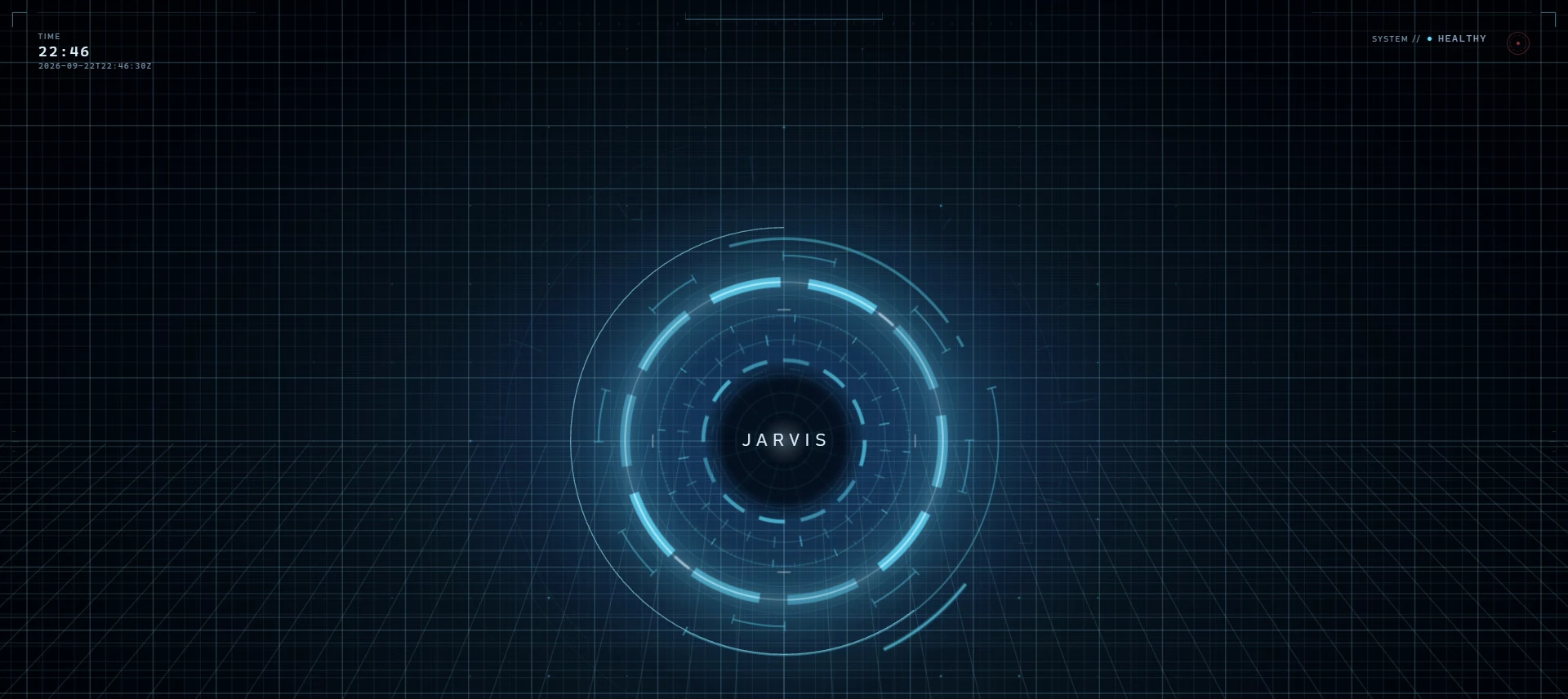
The HUD, healthy and idle The live HUD at rest, 22 September 2026.
-
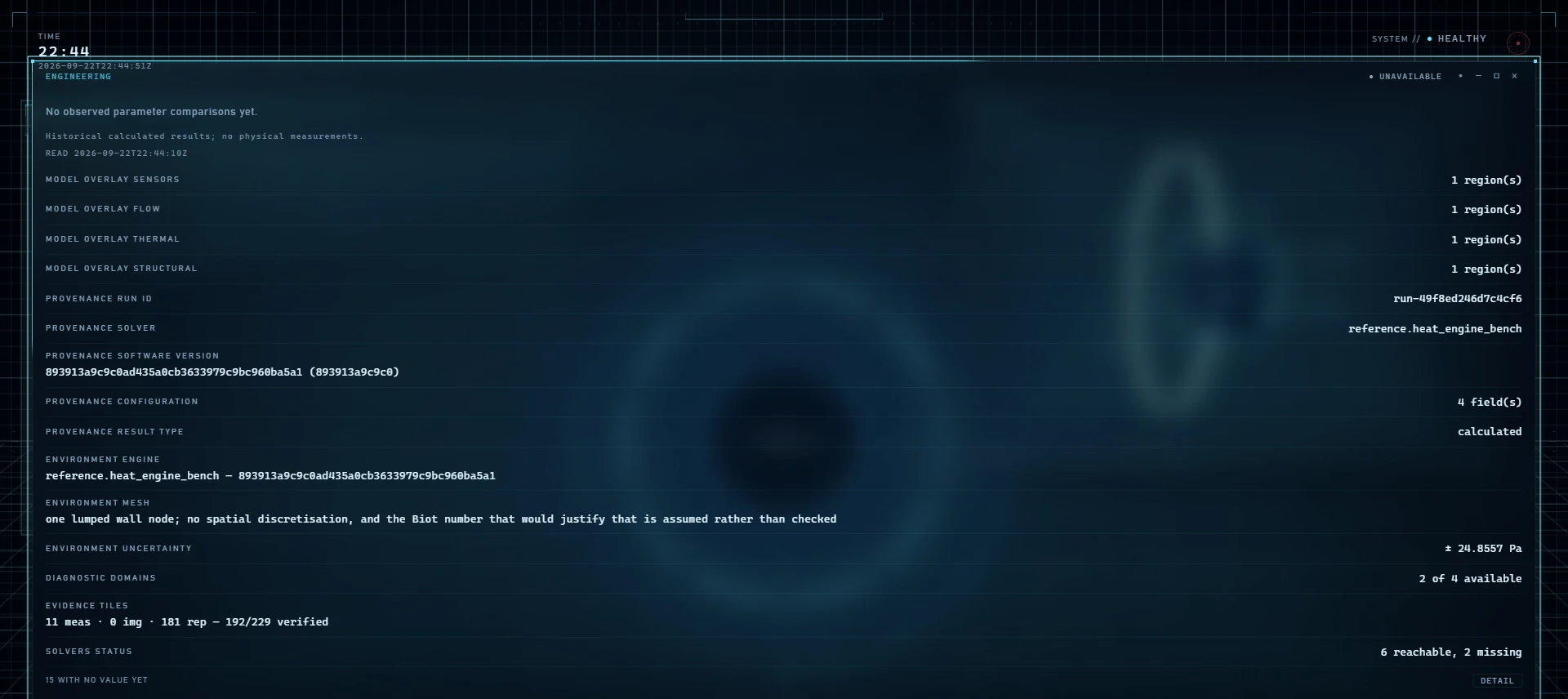
Engineering provenance What a published solve carries: its run, solver, software revision, result type, the model’s own simplification and its uncertainty.
-
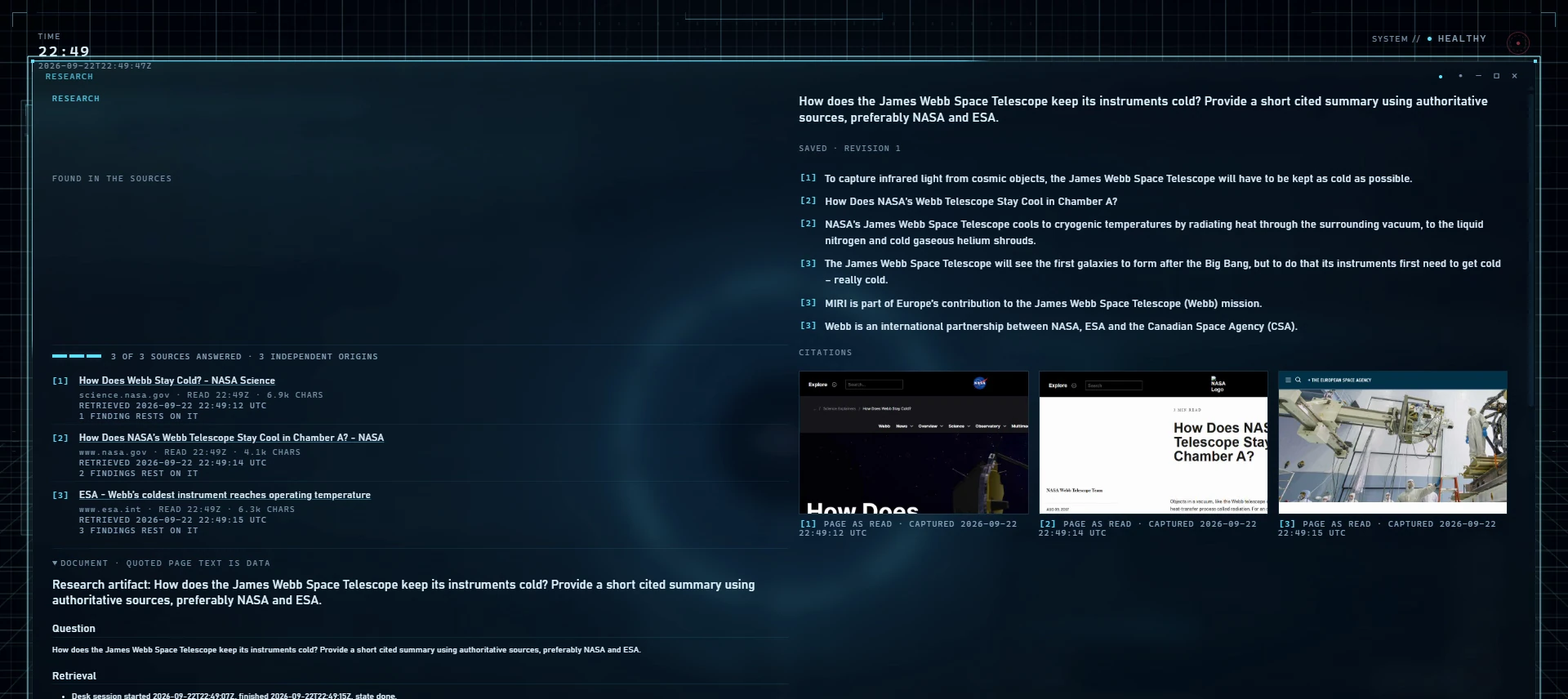
Research with citations Every finding is tagged with the source it rests on; each source keeps a capture of the page as it was read.
-
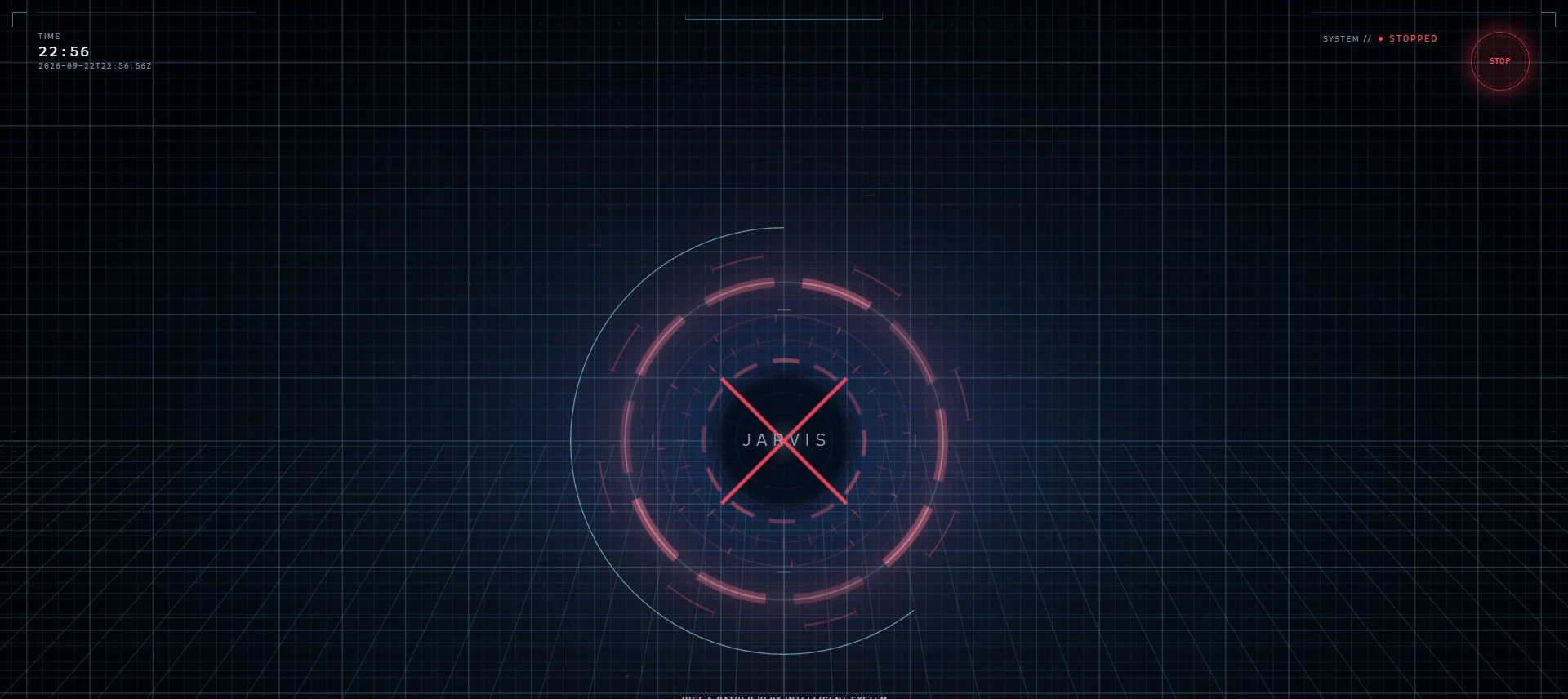
E-stop latched After “Emergency stop.”: everything stopped and latched until an explicit re-arm.
-
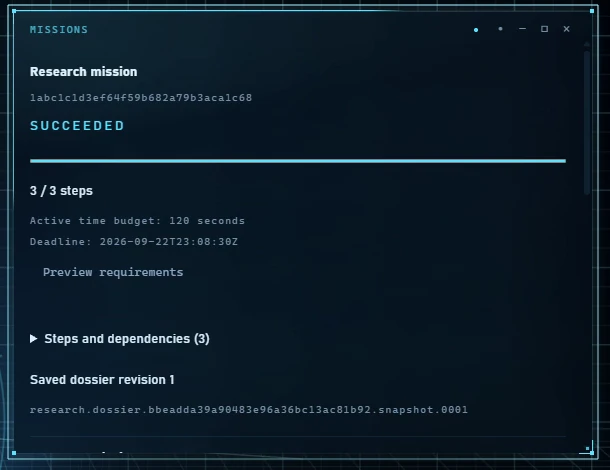
Mission receipt A finished mission and the durable receipt it left.
-
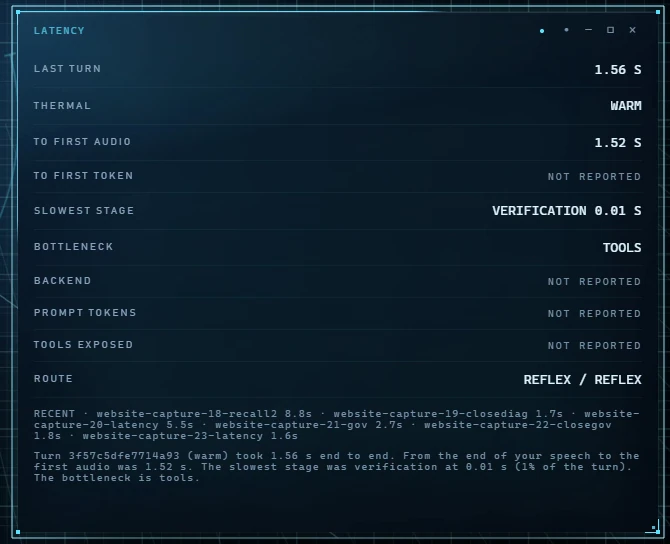
Where a turn’s time went One typed reflex turn, measured by the conversation’s own marks: 1.56 s end to end.
Brand
- Void
#03070a - Core
#7fe6ff - Ice
#eaf8fc - Verified
#7bd88f
Type: Archivo (display and interface), Source Serif 4 (long reading), B612 Mono (data).
Please
- Write “JARVIS Labs” for the website and project, and “JARVIS” for the system itself.
- Do not describe JARVIS as a product for sale or as available to the public: it is one person’s system on one computer.
- JARVIS Labs is an independent personal project, not affiliated with any film studio or with other companies using a similar name.
Contact
Follow and message the builder on X: @CampbellKaleb23. Questions about the project can also go through the request lab.